
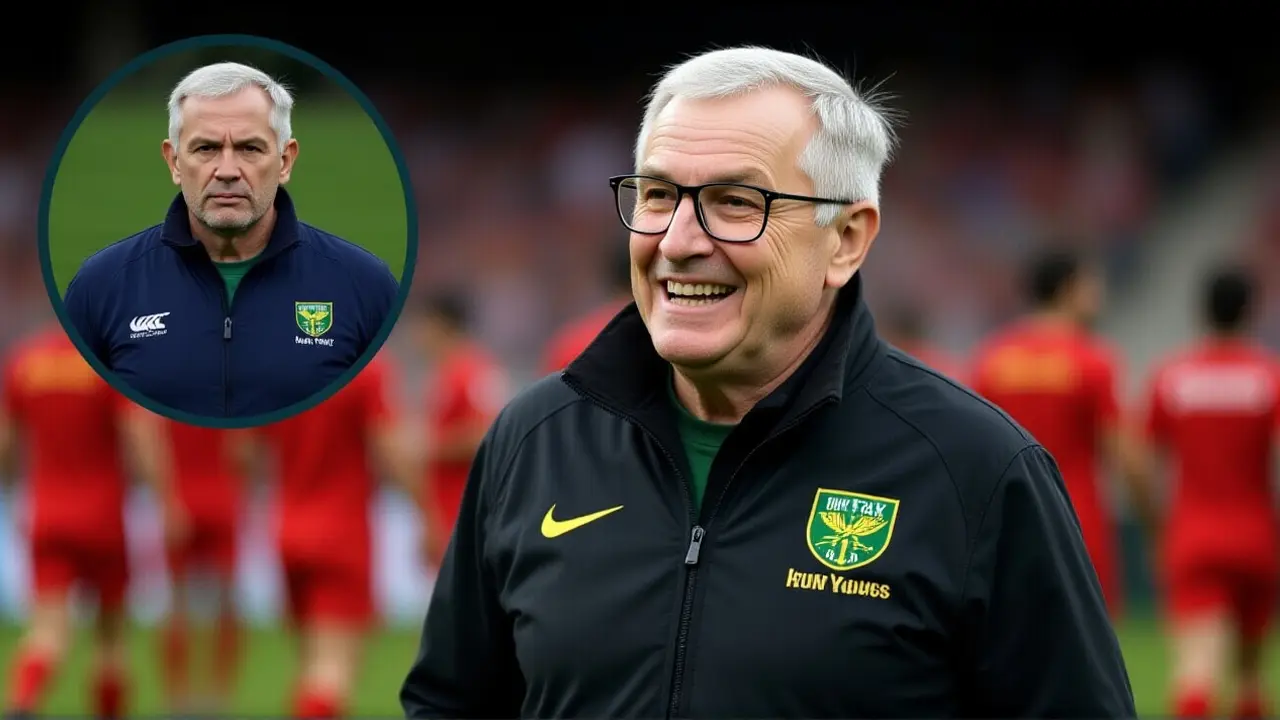
The countdown has begun for one of the most anticipated clashes in rugby, as Rassie Erasmus, the head coach of the Springboks, warns that England is arriving in South Africa as a powerhouse. The two giants are set to collide on Saturday, July 4, 2026, at the historic Ellis Park in Johannesburg, kicking off the inaugural Nations Championship. It's a high-stakes opening that sees South Africa attempting to maintain their edge over a side that hasn't forgotten the sting of recent defeats.
Here's the thing: this isn't just another test match. This is the second time these two sides have locked horns since the 2023 World Cup, where the Boks snatched a nail-biting 16-15 win at the Stade de France. But since then, the momentum has shifted. While South Africa has been managing its world-champion legacy, England has been quietly, and then loudly, rebuilding into a machine that looks almost unstoppable on paper.
A Resurgent England Threatens the Boks
During a press briefing in Cape Town this past Monday, Erasmus didn't mince words. He described the current English setup as something "special," noting that they've managed an incredible streak of 11 consecutive Test victories. It's a level of consistency that puts any opposing coach on edge. The English side isn't just winning; they're dominating the teams that usually dominate them.
Take a look at the numbers. England recently pulled off a gritty 26-25 win over France and, perhaps more alarmingly for the rest of the rugby world, dismantled the All Blacks 33-19 at Twickenham. When you're beating New Zealand by 14 points on your home turf, you've moved beyond just being "in form"—you're a genuine contender for global supremacy.
The twist is that England will enter the July 4th match fully sharpened. They'll have the Six Nations Championship fresh in their lungs, having started their campaign against Wales on February 7, 2026. They'll be match-fit, battle-hardened, and hungry for revenge against the Springboks.
The Seven-Month Gap Challenge
For the Springboks, however, the road to July is a bit more complicated. Erasmus admitted that the timing is tricky, as South Africa will have gone seven months without a Test match by the time they hit the pitch at Ellis Park. Seven months is an eternity in professional rugby. In that window, law changes can be implemented, and the tactical landscape of the game can shift entirely.
Managing a squad that's scattered across the globe is another headache. With players competing in various leagues—including those in Japan—getting the team to gel in time for the opener is a logistical puzzle. To bridge this gap, the coaching staff is planning a warm-up fixture, though the details remain under wraps. It's a race against time to find that championship rhythm again.
The pressure is on SA Rugby to ensure the transition from club form to international intensity is seamless. If the Boks start too slow, they might find themselves chasing a game against an England side that doesn't let up.
A Grueling Winter Schedule for the Boks
The match against England is just the appetizer for a massive winter of rugby in South Africa. Following the July 4th opener, the Springboks have a packed home schedule that will test their depth and endurance:
- July 11, 2026: Facing Scotland at Loftus Versfeld in Pretoria.
- July 18, 2026: Taking on Wales at Hollywoodbets Kings Park in Durban.
But the real heavyweight fight comes in August and September. South Africa will enter the "Rugby's Greatest Rivalry" competition, a three-Test series against New Zealand that promises to be a physical war of attrition. The series will move from Ellis Park on August 22, to DHL Stadium in Cape Town on August 29, and finally conclude at FNB Stadium on September 5.
This sequence of matches means the Springboks will be playing some of the best teams in the world in quick succession, all while adjusting to the new Nations Championship format. It's a brutal itinerary, but one that Erasmus believes is necessary to keep the team at the top of the food chain.

The Road to the Finals Weekend
All of this leads toward the Finals Weekend of the Nations Championship Allianz Stadium, London . Scheduled for November 27-29, 2026, this event will feature a series of double-header matches over three days. For the Boks, the performance in July will set the tone for whether they can realistically eye a spot in those finals.
Oddly enough, while the focus is currently on the English threat, the broader implication is the evolution of the international calendar. The move toward a more structured "Championship" style reflects the sport's desire for more consistent, high-stakes competition outside of the four-year World Cup cycle.
Frequently Asked Questions
Why is Rassie Erasmus concerned about the timing of the England match?
Erasmus is concerned because South Africa will have a seven-month gap since their last Test match before facing England on July 4, 2026. This means the team will be rusty compared to the English squad, who will have just completed the Six Nations Championship, providing them with a significant advantage in match fitness and tactical rhythm.
What is the recent record of the England national team?
England is currently on a dominant run, having won their last 11 consecutive Test matches. Key victories include a tight 26-25 win over France in the Six Nations and a commanding 33-19 victory over New Zealand at Twickenham, signaling a major resurgence in their global competitiveness.
Where can fans watch the Springboks' home matches in July 2026?
The Springboks will play three home tests in July: England at Ellis Park in Johannesburg (July 4), Scotland at Loftus Versfeld in Pretoria (July 11), and Wales at Hollywoodbets Kings Park in Durban (July 18). Ticket sales and exact kick-off times will be released by SA Rugby.
What is the "Rugby's Greatest Rivalry" competition?
It is a high-profile three-Test series between South Africa and New Zealand taking place in August and September 2026. The matches will be hosted at Ellis Park (Aug 22), DHL Stadium (Aug 29), and FNB Stadium (Sept 5), serving as a premier clash between the two most successful nations in rugby history.




Gary Clement
April 11, 2026 AT 12:38the seven month gap is a huge risk for any squad especially with the new nations championship format if they can't nail the timing on that warm up fixture they'll be playing catch up for the whole july window
Shelley Brinkley
April 11, 2026 AT 19:22plz tell me why anyone cares about englands 11 wins lol they just beat teams that are trash right now boks will eat them alive at ellis park
Antony Bachtiar
April 12, 2026 AT 12:21actually the boks are overated as hell. england is just bettter tactically now. rassie is just trying to scare his players into working harder by making the opponent sound like monsters
Beth Elwood
April 12, 2026 AT 22:37The logistical nightmare of having players in Japan and Europe is a real concern for cohesion 🏉 This kind of disjointed preparation can lead to early errors in the first twenty minutes of a match 📉 Hopefully the warm-up game gives them the rhythm they need 🤞
Aaron X
April 14, 2026 AT 18:06The systemic divergence between the Six Nations' temporal cadence and the Boks' hiatus creates a cognitive dissonance in match-readiness. We are seeing a paradigmatic shift where the physiological peak of the English side will likely collide with the South African team's transitional phase of re-acclimation to high-intensity rugby kinetics
Angie Khupe
April 15, 2026 AT 11:58I just hope everyone stays healthy and it's a fair game :)
Priyank Prakash
April 17, 2026 AT 08:01OMG imagine the drama if England actually wins this!! The world would literally explode 😱💥 I can already see the headlines and the salt everywhere!! Just too juicy!! 💅
Mel Alm
April 17, 2026 AT 17:00Englands new style is definitely lookin more polished but Ellis Park is a diffrent beast entirely
nikolai kingsley
April 18, 2026 AT 12:19honestly the way people defend the boks is laughable just coz they won a wc years ago doesnt mean they are still gods on the pitch get over it
Josh Raine
April 19, 2026 AT 15:22Is it even fair to call this a contest if one side is battle-hardened and the other is effectively out of practice? It feels like a setup for failure just to generate hype for the championship. The lack of empathy for the players' biological rhythm in these schedules is appalling... :/
Dianna Knight
April 20, 2026 AT 18:48The synergy between the forwards and the backline is going to be the deciding factor here. If the Boks can maintain their set-piece dominance despite the lack of Test match play, they have a real chance! It's all about that tactical adaptability and mental fortitude <3
Mason Interactive
April 22, 2026 AT 10:03It's wild seeing how the international calendar is changing. This Nations Championship vibe feels a lot more like a league than the old test series. It should make the games way more intense since every single point matters for the finals in London
Alex Green international
April 23, 2026 AT 01:44The discipline required to bridge a seven month gap is immense and I trust the leadership to handle it with grace