
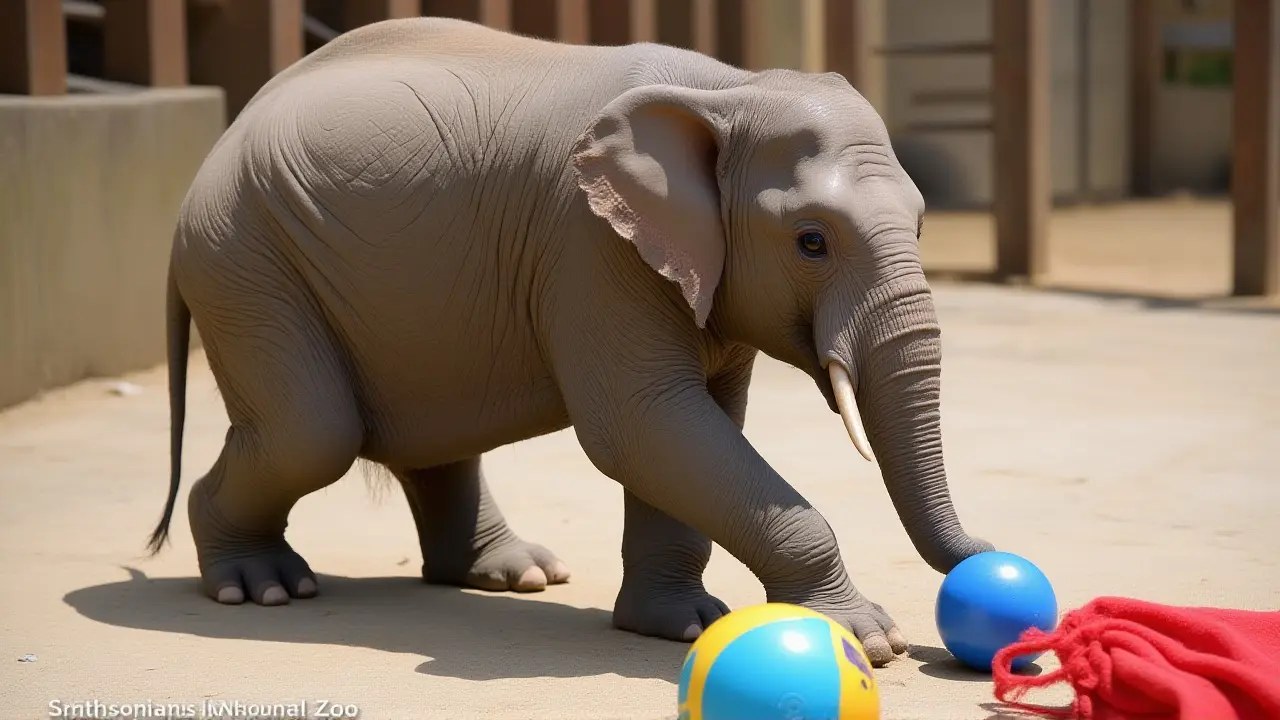
The Smithsonian's National Zoo introduced a new star to the public on Earth Day Washington, D.C. , as Linh Mai, a female Asian elephant calf, finally stepped into the spotlight. This isn't just a cute animal story; it's a massive win for conservation, as Linh Mai is the first Asian elephant born at the facility in over 25 years. After spending two months bonding with her family behind closed doors, the "busy bundle of joy" is now officially greeting the world.
Here's the thing: bringing an elephant calf into the world is a high-stakes gamble. For a quarter-century, the zoo hadn't seen a birth like this. Now, the arrival of Linh Mai serves as a living symbol of hope for a species that is slipping away in the wild. By timing her debut with Earth Day, the zoo isn't just showing off a baby animal; they're reminding us why protecting these giants matters before they disappear entirely.
A Sassy Start: Linh Mai's Growth and Personality
Born on February 2, 2026, Linh Mai has spent her first few months essentially eating and growing. It's been a whirlwind of development. Turns out, she has quite the appetite, gaining roughly 3 pounds every single day. As of her debut, she has already climbed to nearly 500 pounds. That's a lot of baby elephant to keep track of (and a lot of milk).
But it's not all about the weight gain. Zoo keepers describe her as having a "sassy" personality. She's curious, energetic, and constantly on the move. To keep her engaged, the staff has introduced various forms of recreational enrichment. Interestingly, one of her favorite activities involved a bubble bath on March 25, 2026, which provided some heart-melting footage for the staff and, eventually, the public.
The social dynamic is perhaps the most heartwarming part of the story. Linh Mai hasn't just had her mother; she's been embraced by a group of "helpful aunties." These adult female elephants have effectively taken her under their trunks, providing the social cushioning and guidance necessary for a calf to thrive. This herd structure is vital, as elephants are deeply social creatures that learn complex behaviors from their elders.
The High Stakes of Asian Elephant Conservation
While the public is enamored by the "cute factor," the underlying reality is sobering. Asian elephants are classified as an endangered species, and the numbers are grim. Experts estimate there are 50,000 or fewer individuals remaining in the wild. Habitat loss and poaching have decimated their populations across Asia.
Because of this, breeding programs at institutions like the National Zoo are more than just a zoo attraction—they are a genetic insurance policy. Every successful birth, like Linh Mai's, helps maintain a healthy, genetically diverse population in captivity, which can provide critical data and support for wild population recovery efforts.
- Born: February 2, 2026
- Public Debut: April 22, 2026 (Earth Day)
- Weight Gain: Approx. 3 lbs per day
- Current Weight: Nearly 500 lbs
- Species Status: Endangered (<50,000 in wild)
Bridging the Gap via the Elephant Cam
Recognizing that not everyone can make the trip to Washington, D.C., the zoo has leaned into technology to share the experience. They've launched a live elephant cam that broadcasts from 7:00 AM to 7:00 PM daily. For those who miss the live window, the zoo provides pre-recorded highlights from the day's events.
This digital window allows the world to witness the calf's development in real-time. It turns a local event into a global educational moment. When people see a 500-pound baby playing with bubbles, they're much more likely to care about the systemic issues—like deforestation and ivory trade—that threaten her wild cousins.
What This Means for the Future
The successful integration of Linh Mai into her herd is a testament to the zoo's management and the instincts of the adult elephants. The next few years will be critical as she grows and learns the complex social cues of her species. The zoo's ability to successfully raise a calf after such a long gap in births suggests that their reproductive and husbandry protocols are hitting their stride.
Looking ahead, the focus will shift toward monitoring her health and ensuring she remains a cohesive part of the herd. The media frenzy surrounding her debut—covered by outlets like ABC News and CBS 6 WTVR—has put a spotlight back on the Smithsonian's role in global conservation. It's a reminder that zoos are evolving from mere exhibition spaces into active participants in saving species from extinction.
Frequently Asked Questions
Why is Linh Mai's birth such a big deal?
Linh Mai is the first Asian elephant born at the Smithsonian's National Zoo in over 25 years. Because Asian elephants are endangered with fewer than 50,000 left in the wild, successful births in controlled environments are vital for maintaining genetic diversity and supporting conservation research.
How can people see Linh Mai if they aren't in D.C.?
The National Zoo provides a live elephant cam on their website. It broadcasts live from 7:00 AM to 7:00 PM daily, and they upload pre-recorded footage after 7:00 PM so visitors can watch her interactions with the herd from anywhere in the world.
How is the calf doing health-wise?
She is thriving and growing rapidly, gaining about 3 pounds per day. She currently weighs nearly 500 pounds and has successfully integrated with her herd, receiving care and guidance from several adult female "aunties."
What is "recreational enrichment" for an elephant?
Enrichment involves activities that stimulate an animal's natural curiosity and behaviors. For Linh Mai, this has included things like bubble baths, which keep her mentally engaged and physically active, helping her develop normally in a captive environment.





Angie Khupe
April 25, 2026 AT 16:36This is just the sweetest thing ever! 🐘❤️ So glad she has those aunties to look after her. It really shows how much love these animals have for their own :)
Gary Clement
April 25, 2026 AT 19:16the role of allomothering in elephant herds is actually fascinating because it helps the young females learn parenting skills before they have their own calves which basically ensures the survival of the next generation
Antony Bachtiar
April 26, 2026 AT 07:23Typical zoo propaganda. they act like they're saving the species but they're just keeping them in concrete boxes for our amusement lol. a "genetic insurance policy" is just a fancy way of saying they want more animals to sell tickets to. totaly fake news on the conservation part
Josh Raine
April 26, 2026 AT 15:20Actually, the ethical implications of captive breeding are a nightmare! Why are we pretending this is "hope" when the habitat is still being burned down by corporations? It's a systemic failure masquerading as a cute baby animal story. Give me a break! 🙄
nikolai kingsley
April 27, 2026 AT 05:57people love to complain but at least the zoo is tryin some thing. maybe if u actually read the post u would see its about genetic diversitY. stop being so dramtic and let the baby be happy
Beth Elwood
April 27, 2026 AT 20:19Actually, the Smithsonian follows very strict AZA accreditation standards for their breeding programs 🐘✨. These facilities provide critical research on gestation and calf health that can't be gathered in the wild, which directly informs anti-poaching strategies 🛡️🐾
Aaron X
April 29, 2026 AT 19:27The juxtaposition of the anthropomorphic "sassy" narrative against the bleak existential reality of the Holocene extinction is jarring. We are essentially observing a biological specimen in a simulated environment, attempting to mitigate the ontological collapse of a species through artificial selection and curated socialization. It is a paradox of preservation.
Mel Alm
April 30, 2026 AT 08:57i just want to see the buble bath video lol
Mason Interactive
May 1, 2026 AT 21:57The elephant cam is a great touch. It's kind of cool how tech lets people from all over the world connect with nature without having to fly across the globe. Definitely makes the conservation message hit harder for people who've never seen an elephant in person.
Dianna Knight
May 3, 2026 AT 05:00The implementation of positive reinforcement training and cognitive enrichment protocols for calves is absolutely paramount for their psychological wellbeing
It is so wonderful to see the herd dynamics functioning so naturally and providing that essential socio-emotional support system for Linh Mai 🌸🐘. I honestly believe these early milestones in social integration are the most critical indicators of long-term success for captive-born megafauna ✨
Alex Green international
May 4, 2026 AT 17:40It is truly commendable that the institution has prioritized the bonding period before public introduction. Such a measured approach ensures the calf's stability and psychological health during this formative stage of development